
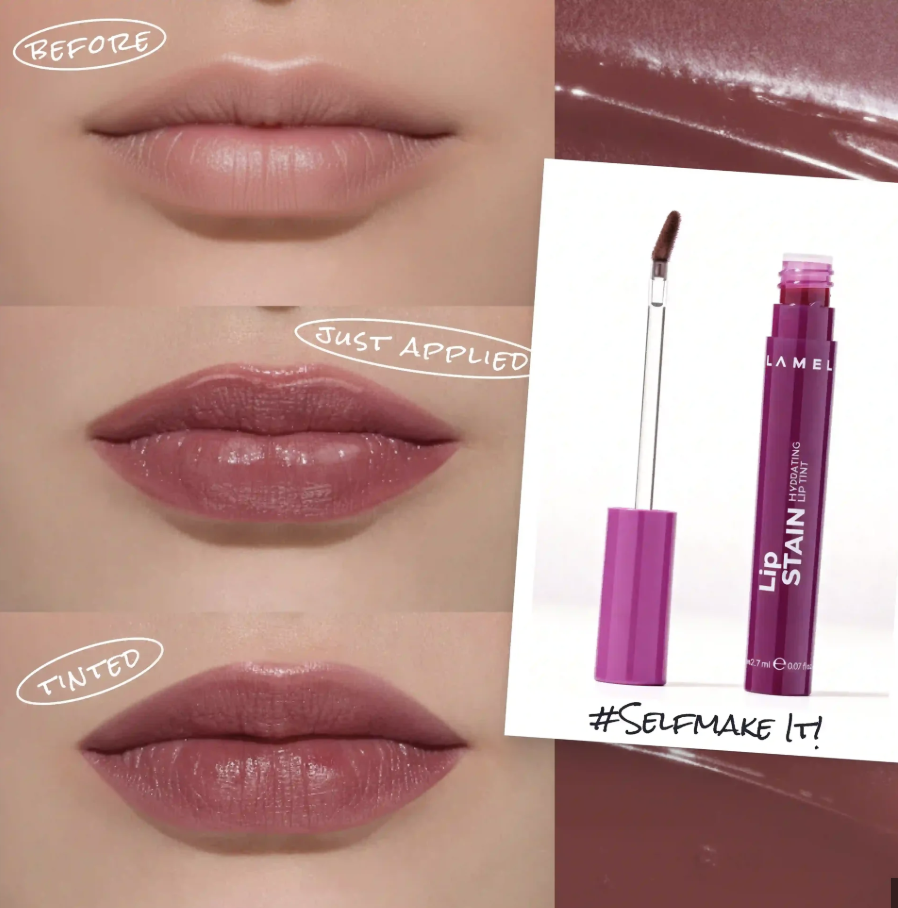
There is a very specific moment you know well. You are in a bar bathroom at 2am, looking in the mirror, and where there was once colour there is now a vague pinkish suggestion around the edges of your lips. Your lipstick survived exactly until the second drink.
That is not your fault. It is chemistry.
Regular lipsticks — even the ones marketed as long-lasting — are formulated to sit on top of your lips, not fuse with them. Think of it like painting glass: the colour stays put until something drags it away. And it turns out everything drags colour away. The drink, the mask, the 3am pizza, the kiss you did not see coming.
A lip stain works differently.
What a lip stain actually does
Instead of building a layer on top of the skin, the tint penetrates the surface layers of the lip and deposits pigment inside the tissue itself. There is no film to remove because there is no film — the colour literally becomes part of your lip for hours.
The practical result: it does not come off with food, it does not transfer onto masks, it does not show up on the rim of your glass. What you put on at 8am before class has a very good chance of still being there when you finish your shift at 7pm.
The technical difference matters, but the difference in your day matters more. With a regular lipstick you reapply an average of three to five times a day if you want to keep the colour looking intentional. With a good lip stain, one morning application is enough. That is between ten and twenty minutes a week you get back, and a considerable amount of “how do my lips look right now” anxiety that simply disappears.
The most common misunderstanding
A lot of people try their first lip stain and come away disappointed — usually because they applied too much or did not wait for it to dry. A lip stain is not just a lipstick with a different name. The application technique is genuinely different.
The key is quantity. Less is more. A thin layer, left to dry completely — anywhere from thirty seconds to two minutes depending on the formula — gives a surprising depth of colour and a hold that lasts hours. If you apply too heavily or move your lips before it sets, the product collects in the fine lines and the result is not pretty.
The other common mistake is confusing lip stain with lip tint. Korean lip tints — the version K-beauty popularised — tend to be very lightweight, almost watery formulas that give a natural, just-bitten effect. They are beautiful but generally less intense and less durable than a long-wear stain specifically formulated to last.
If you need serious colour that holds through real conditions — a work shift followed by a night out, no retouching — you need a lip stain specifically built for that, not just any tint.
What nobody tells you about shade range
Here is the problem that comes up again and again: the brands that actually formulate well for long wear almost always stick to nudes, browns, and dusty pinks. As if lips that need to last eight hours can only be beige.
The truth is that red pigment, terracotta, cherry, burgundy — the colours that actually change how you look — are technically harder to set without becoming dry, patchy, or leaving a strange residue as they fade. Most brands simply do not bother solving it.
The result is that you have to choose between a colour you love and a colour that lasts. Either you wear the gorgeous red that needs retouching every two hours, or you wear the nude that holds but does not excite you.
It does not have to be that way.
How to choose yours
Before buying any lip stain, ask yourself three questions.
What situation is it for? Day-to-day wear — work, class, errands — a lighter formula with a natural finish works perfectly. For nights out or twelve-hour days, you need a formula specifically tested for long wear, not just labelled “resistant.”
What finish do you prefer? Lip stains come in matte, satin, and semi-gloss. Matte tends to be the most durable. Satin is more comfortable for all-day wear. Semi-gloss gives a plumper appearance but generally lasts less.
Can you test it first? The colour in the tube lies. The same formula can look completely different on different skin tones. Whenever possible, swatch on your actual lips — not the back of your hand — before committing.
A good lip stain should last a minimum of six hours under normal conditions, survive a meal, and fade evenly when it starts to go — not disappear in patches or leave a defined outline. If yours does not do that, it is not the product category, it is the formula. And there are better ones.
There is a very specific moment you know well. You are in a bar bathroom at 2am, looking in the mirror, and where there was once colour there is now a vague pinkish suggestion around the edges of your lips. Your lipstick survived exactly until the second drink.
That is not your fault. It is chemistry.
Regular lipsticks — even the ones marketed as long-lasting — are formulated to sit on top of your lips, not fuse with them. Think of it like painting glass: the colour stays put until something drags it away. And it turns out everything drags colour away. The drink, the mask, the 3am pizza, the kiss you did not see coming.
A lip stain works differently.
What a lip stain actually does
Instead of building a layer on top of the skin, the tint penetrates the surface layers of the lip and deposits pigment inside the tissue itself. There is no film to remove because there is no film — the colour literally becomes part of your lip for hours.
The practical result: it does not come off with food, it does not transfer onto masks, it does not show up on the rim of your glass. What you put on at 8am before class has a very good chance of still being there when you finish your shift at 7pm.
The technical difference matters, but the difference in your day matters more. With a regular lipstick you reapply an average of three to five times a day if you want to keep the colour looking intentional. With a good lip stain, one morning application is enough. That is between ten and twenty minutes a week you get back, and a considerable amount of “how do my lips look right now” anxiety that simply disappears.
The most common misunderstanding
A lot of people try their first lip stain and come away disappointed — usually because they applied too much or did not wait for it to dry. A lip stain is not just a lipstick with a different name. The application technique is genuinely different.
The key is quantity. Less is more. A thin layer, left to dry completely — anywhere from thirty seconds to two minutes depending on the formula — gives a surprising depth of colour and a hold that lasts hours. If you apply too heavily or move your lips before it sets, the product collects in the fine lines and the result is not pretty.
The other common mistake is confusing lip stain with lip tint. Korean lip tints — the version K-beauty popularised — tend to be very lightweight, almost watery formulas that give a natural, just-bitten effect. They are beautiful but generally less intense and less durable than a long-wear stain specifically formulated to last.
If you need serious colour that holds through real conditions — a work shift followed by a night out, no retouching — you need a lip stain specifically built for that, not just any tint.
What nobody tells you about shade range
Here is the problem that comes up again and again: the brands that actually formulate well for long wear almost always stick to nudes, browns, and dusty pinks. As if lips that need to last eight hours can only be beige.
The truth is that red pigment, terracotta, cherry, burgundy — the colours that actually change how you look — are technically harder to set without becoming dry, patchy, or leaving a strange residue as they fade. Most brands simply do not bother solving it.
The result is that you have to choose between a colour you love and a colour that lasts. Either you wear the gorgeous red that needs retouching every two hours, or you wear the nude that holds but does not excite you.
It does not have to be that way.
How to choose yours
Before buying any lip stain, ask yourself three questions.
What situation is it for? Day-to-day wear — work, class, errands — a lighter formula with a natural finish works perfectly. For nights out or twelve-hour days, you need a formula specifically tested for long wear, not just labelled “resistant.”
What finish do you prefer? Lip stains come in matte, satin, and semi-gloss. Matte tends to be the most durable. Satin is more comfortable for all-day wear. Semi-gloss gives a plumper appearance but generally lasts less.
Can you test it first? The colour in the tube lies. The same formula can look completely different on different skin tones. Whenever possible, swatch on your actual lips — not the back of your hand — before committing.
A good lip stain should last a minimum of six hours under normal conditions, survive a meal, and fade evenly when it starts to go — not disappear in patches or leave a defined outline. If yours does not do that, it is not the product category, it is the formula. And there are better ones.
How to Make Your Lip Stain Last All Night (What the Brands Never Tell You)
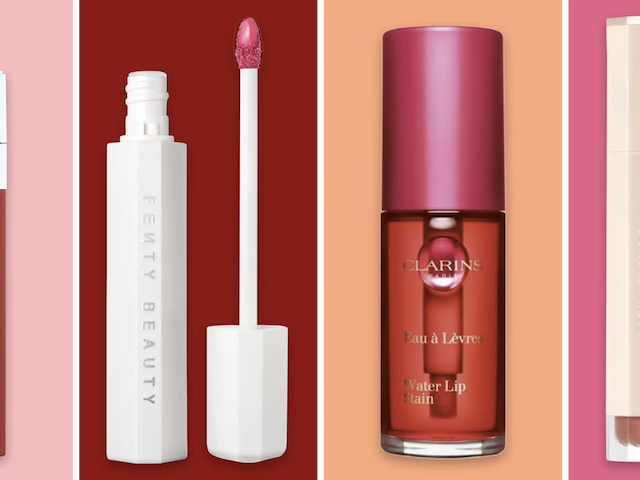
You buy the lip stain with the best TikTok reviews. You apply it following the packaging instructions. Two hours later half the colour is on your mask and the other half is on your coffee cup.
The product is probably not bad. Nobody explained to you that there is a difference between applying a lip stain and applying it well.
Here is what actually works.
Start with your lips, not the product
The most expensive mistake you can make with a lip stain is applying it to unprepared lips. If you have any dry or flaky skin on your lips — which is completely normal, not an anomaly — the tint is going to grip unevenly to the rougher areas and fade faster on the smoother ones. The result is patchy lips by hour three.
The fix is a lip scrub the night before, or at minimum a gentle exfoliation ten minutes before application. You do not need anything elaborate — sugar and olive oil works just as well as any branded product.
After the scrub, moisturise. But here is the detail most people skip: let the moisturiser absorb completely before applying the stain. If you put the tint over a layer of balm that is still wet or greasy, you are creating a barrier that stops the pigment from penetrating the lip tissue. Ten minutes of waiting can genuinely double how long the colour lasts.
The application technique that changes everything
Most people apply lip stain like a lipstick — one continuous stroke from one side to the other. That works, but it is not optimal.
The technique that gives the most even and lasting results is thin layers with drying time between each one. Apply a light layer, let it dry completely — you can open your mouth slightly and blow gently to speed this up — then add a second layer if you want more intensity. Two thin layers last significantly longer than one thick one because the pigment has time to bind to the tissue before you add more on top.
For the most pigmented colours — reds, terracottas, burgundies — this is especially important. One thick layer of an intense colour is much more likely to move unevenly as the night goes on.
One more detail: centre of the lips first, edges after. The centre is the zone that has the most contact with food and drinks, so it makes sense for it to have maximum hold. If you start at the outline and arrive at the centre with less product, you are putting your most durable colour in the wrong place.
The setting step nobody does but everyone should
This is not on any packaging but it works: after applying your lip stain and letting it dry completely, press a single sheet of tissue paper gently against your lips for a few seconds. Do not rub — just press.
What you are doing is removing the excess product sitting on the surface that is the first thing to come off when you eat or drink. What stays bonded to the lip tissue is the pigment that will actually last. This one step alone can add one to two hours of wear.
If you want to go one step further, a lip liner in the same shade or one shade darker applied before the stain creates a textured base the pigment grips better. It is not essential, but if you have a long night ahead, it is worth the extra thirty seconds.
What to do and what to avoid to keep the colour
Once correctly applied, there are behaviours that will destroy your lip stain early regardless of how good the formula is.
What destroys colour fastest: eating fatty foods. Oil is the biggest enemy of any lip tint — it actively dissolves the pigment. Drinking from the rim of a glass instead of using a straw. Touching your lips repeatedly — every time your fingers or tongue make contact, a microscopic layer of colour comes with it.
What helps: if you do need to retouch, remove what little colour remains first with a lip makeup remover or a drop of jojoba oil before reapplying. Putting fresh lip stain over stain that is already fading unevenly produces a worse result than starting from scratch.
When a lip stain is not the right tool
Being honest: if your lips are chronically very dry or cracked, no lip stain will give you satisfying results until you address the underlying issue. The tint needs a reasonably smooth surface to adhere evenly.
The difference between a lipstick that lasts two hours and a properly applied lip stain that lasts eight is not only in the formula. It is in the five minutes of preparation that most people skip.
The Lip Stain Shades That Actually Last in Summer (And Why Red Is the Hardest to Find Done Right)
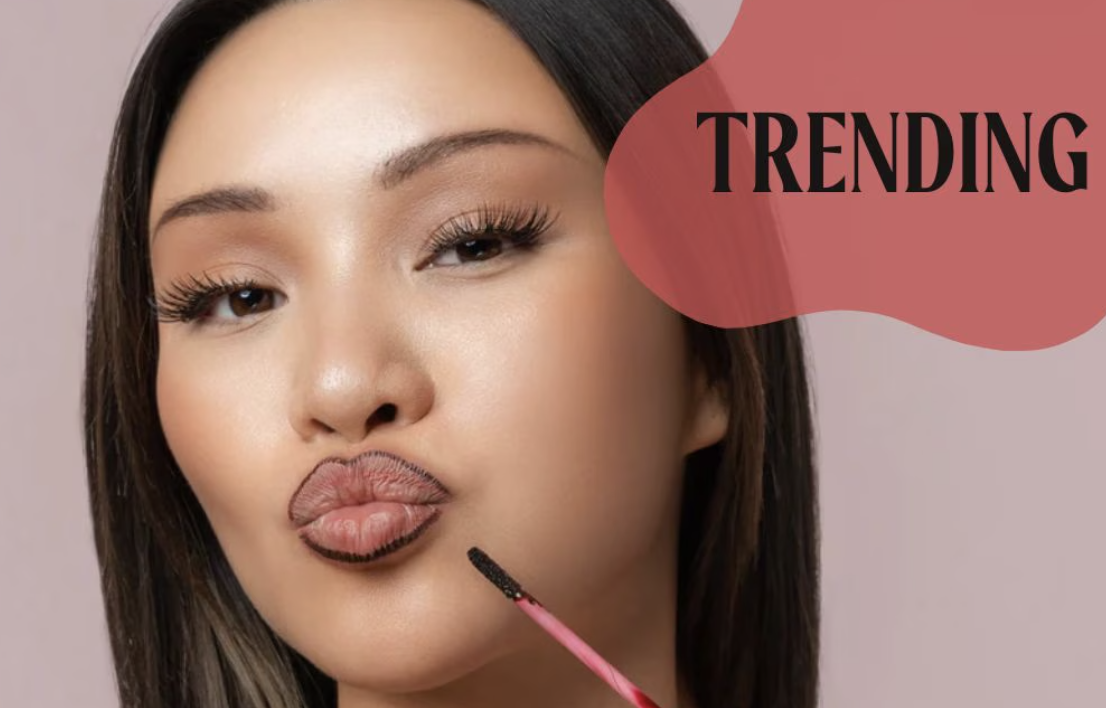
Summer is the ultimate test for any lip product. Heat, sweat, terraces, pools, festivals, nights that do not start until 10pm. If your lip stain survives a Saturday in July without a retouch, it is a serious product.
But not all colours behave the same way under thermal stress. There is something in how certain pigments are formulated that makes some shades hold up in heat far better than others — and most brands will never tell you this because it would mean admitting their reds last less than their nudes.
Here is the truth about which colours to look for this summer and what to expect from each one.
Why nudes always win on wear time
This is not marketing or aesthetic preference: nude, brown, and dusty pink tones are genuinely easier to formulate for long wear. They have two clear technical advantages.
First, the pigment intensity required is lower. The more concentrated pigment a formula needs, the harder it is to keep that pigment in place. Nudes need less pigment load to achieve their effect, so the formula has more room for bonding agents.
Second, when they fade, they do so almost invisibly. A nude that loses thirty percent of its intensity at hour six simply looks like it has softened. A red that loses the same percentage of intensity looks like it is halfway between red and bare lips — which is exactly the result nobody wants.
This does not mean nudes are your only option. It means that when a brand manages to make a red or a terracotta hold as well as their nude, they have solved a real technical problem and it is worth paying attention to.
Terracotta: the summer shade with the best wear-to-impact ratio
If you had to pick one single lip stain colour for summer that balances visual impact with durability, terracotta is the right answer.
Terracotta tones — that family running from burnt orange through to red-brown earth — sit at an intermediate pigment load that makes them more durable than pure reds but more interesting visually than nudes. They also have a summer-specific aesthetic advantage: they work with virtually every skin tone that has been in the sun, and the natural fade effect they produce after a few hours looks intentional rather than neglected.
In practical terms, a well-formulated terracotta in a quality lip stain should comfortably last seven to eight hours on a hot day with food and drinks involved. It is the most reliable colour in the spectrum for long occasions.
Red: how to find one that genuinely lasts
Red is the colour most people want and the one that generates the most disappointment. Red pigments — especially cool, blue-toned reds like cherry and raspberry — are the most prone to breaking down with heat and humidity.
But “reds do not last” is not a physical law, it is a formulation problem that some brands have solved and most have not bothered to.
What to look for when buying a long-wear red lip stain: formulas that specify “transfer-proof” rather than just “long-lasting.” The difference matters — long-lasting can refer to colour under ideal conditions, transfer-proof means the pigment does not move when it comes into contact with external surfaces.
Look for reds with a warm brown-terracotta base rather than pure cool reds. A warm red — think ripe cherry, not traffic light — is formulated with a more stable pigment base. Cool, bright reds are the ones that cause the most trouble.
Consider the finish intensity. Red in a matte finish consistently outlasts red in a satin or gloss finish because the absence of shine agents in the formula leaves more room for bonding agents.
Dark shades: the best-kept secret in long wear
Here is the secret most people do not know: burgundy, plum, garnet — the darkest colours — are frequently the longest-lasting in any range.
The reason is counterintuitive. Very dark tones have such a high pigment concentration that even when the colour loses intensity, it is still a dark tone. The fade is almost imperceptible because there is always enough pigment present to maintain the intended effect.
In summer terms, this means a well-applied burgundy can literally survive an entire night out with no noticeable retouch needed. The only special care dark tones require is precision on application — any imprecision at the edges shows much more than it would with a nude.
A practical shade guide by situation
Long night out and you do not want to think about retouching: burgundy or dark terracotta. Maximum pigment load gives the most even fade.
Visual impact with reasonable durability: mid terracotta or warm red. Not indestructible but holds well with good application technique.
Extreme heat or time near water: light nude tint. Not the most exciting colour but the one that survives an afternoon at the pool.
You want the red and that is final: choose a warm red, apply in thin layers, set with tissue paper. That combination will give you the best possible wear time with the colour you actually want.
Perfect summer lip products do not exist. But the right lip stain, in the right shade, applied correctly, can hold for hours in conditions that would destroy any conventional lipstick. That is worth looking for.